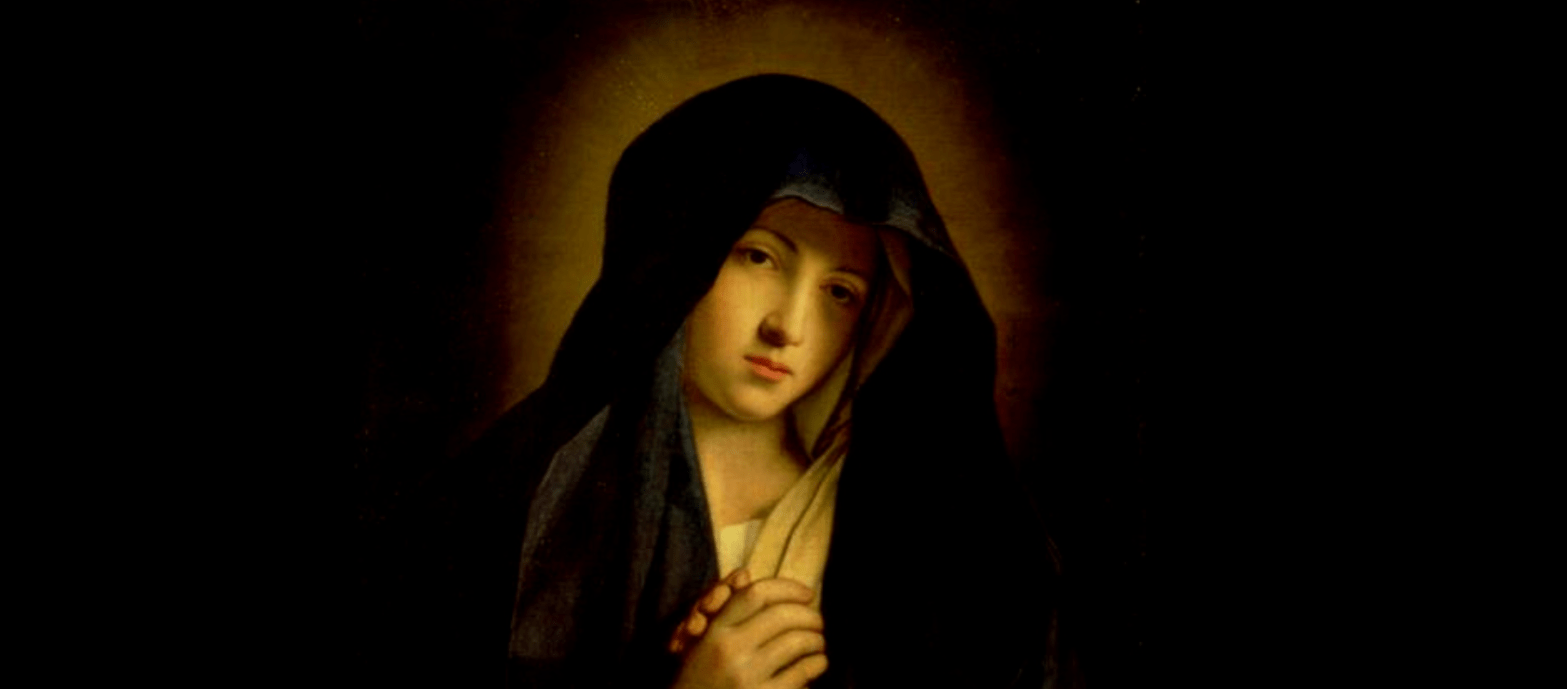
Lately I have been wondering how Mary came to be so strong in her faith. Today, we have so many heavenly beings available to hear our prayers, from our deceased relatives, to all of the saints, to Our Lady and to Jesus, and to God the Father himself. Not to mention our ability to turn to the gospels for information and inspiration based on the life of Jesus.
In Mary’s day, Jesus had not yet been born. The Resurrection was a full 33 years after the Nativity of Our Lord. And Mary predeceased so many of the saints. So how did her faith develop? To whom did Mary pray?
I’ve discovered that Mary simply sought God.
Coincidentally, or perhaps not, this question weighed heavily on me on Oct. 2, the day the gospel reading was about having faith the size of a mustard seed.
The Lord replied, “If you have faith the size of a mustard seed, you would say to [this] mulberry tree, ‘Be uprooted and planted in the sea,’ and it would obey you.”
Luke 17: 5-10
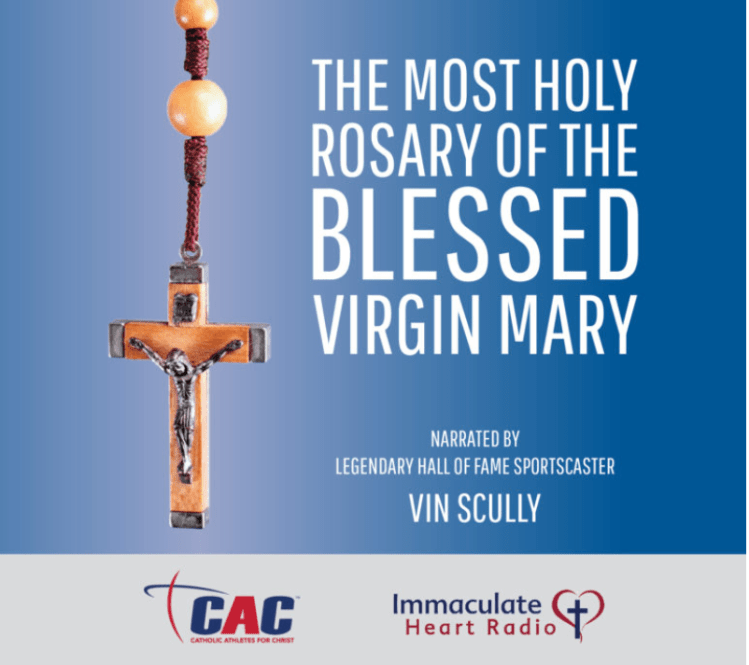
It was also during this period in which I was pondering this question, that I was praying the rosary – the version that famed Dodger Broadcaster Vin Scully leads through a CD produced by Catholic Athletes for Christ. I was listening to him explain the second of the Joyful Mysteries, “The Visitation.” As Scully said when announcing the second mystery, Elizabeth, whom Mary visited immediately after the Annunciation, said to Mary,
“Blessed are you who believed that what was spoken to you by the Lord would be fulfilled.”
(Luke 1:45)
But why did Mary believe?

In search of answers, I went directly to Dr. Robert Fastiggi, Bishop Kevin M. Britt Chair of Dogmatic Theology and Christology, at Sacred Heart Major Seminary.
When I asked Dr. Fastiggi to whom Mary prayed, he replied: “The Virgin Mary was raised in the faith of Israel and so she prayed to the Lord God as revealed in the Old Testament.”
Dr. Fastiggi, who presented as part of the wonderful self-paced online course titled “Behold Thy Mother: Getting to Know the Blessed Virgin Mary,” offered through Sacred Heart Major Seminary, said Mary brought her prayer requests to God himself and had faith that her prayers were heard by him.
Dr. Fastiggi provided a link to the Vatican website where Pope Paul VI writes in his Apostolic Exhortation, “MARIALIS CULTUS,”about Mary and her faith.
“Blessed is she who believed that the promise made her by the Lord would be fulfilled” (Lk. 1:45). As St. Irenaeus seems to suggest, it is in Mary’s canticle that there was heard once more the rejoicing of Abraham who foresaw the Messiah (cf. Jn. 8:56)(48) and there rang out in prophetic anticipation the voice of the Church: “In her exultation Mary prophetically declared in the name of the Church: ‘My soul proclaims the glory of the Lord….'”(49) And in fact Mary’s hymn has spread far and wide and has become the prayer of the whole Church in all ages.”
Vatican website
Finally, Pope Paul VI continues in his exhortation:
“Likewise, the last description of Mary’s life presents her as praying. The apostles “joined in continuous prayer, together with several women, including Mary the mother of Jesus, and with his brothers” (Acts 1:14). We have here the prayerful presence of Mary in the early Church and in the Church throughout all ages, for, having been assumed into heaven, she has not abandoned her mission of intercession and salvation.(50) The title Virgin in prayer also fits the Church, which day by day presents to the Father the needs of her children, “praises the Lord unceasingly and intercedes for the salvation of the world.”(51)”
Vatican website
As I continued to research, I googled “Why did Mary have such a strong faith?” The first search result that popped up was from the University of Dayton. It reads as follows:
Only one passage in Scripture associates Mary with the noun πίστις, “faith” in Greek, or the verb πιστεύειν, “to believe.” This passage is Luke 1:45, which reads: “Blessed is she who believed—ἡ πιστεύσασα (aor. ptc. fem.)—that there would be a fulfillment of what was spoken to her from the Lord.”
“Here, the crucial point about Mary’s faith is that Mary is not praised for having believed in a set of doctrines or a dogma, but rather because she trusted the word of God. She trusted God to keep his promise.”
Further, the document reads: “…We stated at the outset that Mary’s faith is first of all faith as trust. We could say the same about the faith that the risen Jesus expects from his disciples. Thomas, for example, should have trusted the witness of the other apostles. The object of such trust, however, is quite different than the object of Mary’s trust. For the faith of the disciples in John 20 is about a past event; it looks back. Although Thomas did not see the apparition of the risen Jesus that took place a week earlier, that the other apostles did see and witness. On the other hand, the faith of Mary, praised by Elizabeth in Luke 1, is about something to come; it looks ahead. Nobody has seen it yet. When Mary believes, there is no other witness, no one else to rely on—not even the Old Testament prophets, for none of them explicitly announced that the Messiah to come would be conceived by a virgin. So, Mary can only trust the message from God. She can only trust God.”
Further in the document is the following that supports faith in its purest form: From in John 20:29, where the risen Jesus says to Thomas:
“Blessed are those who have not seen and yet believe.”
John 20:29
I am hoping to bring more knowledge about the Virgin Mary to the world, especially during these times when we need her most. Please consider sharing this post, this site, or its social media pages on Facebook and Instagram. I invite you to subscribe to this site (below) to be notified of new posts. Thank you.
 searchingforthevirginmary.com
One thought on “To whom did Mary pray?”