I am a doubter. I need proof. I am “Thomas.”
Someone once told me that doubt is the thing that keeps us on the road, looking around the corner for the truth. In other words, doubt leads to truth. Therefore faith does not require the absence of doubt.
Still, I have found great value in seeing the relics of our saints. The bodies of the saints and the things that they touched, when the chain of custody can be tracked to today, are truly a link that connects us with the past and to those who came before us. It makes them real.
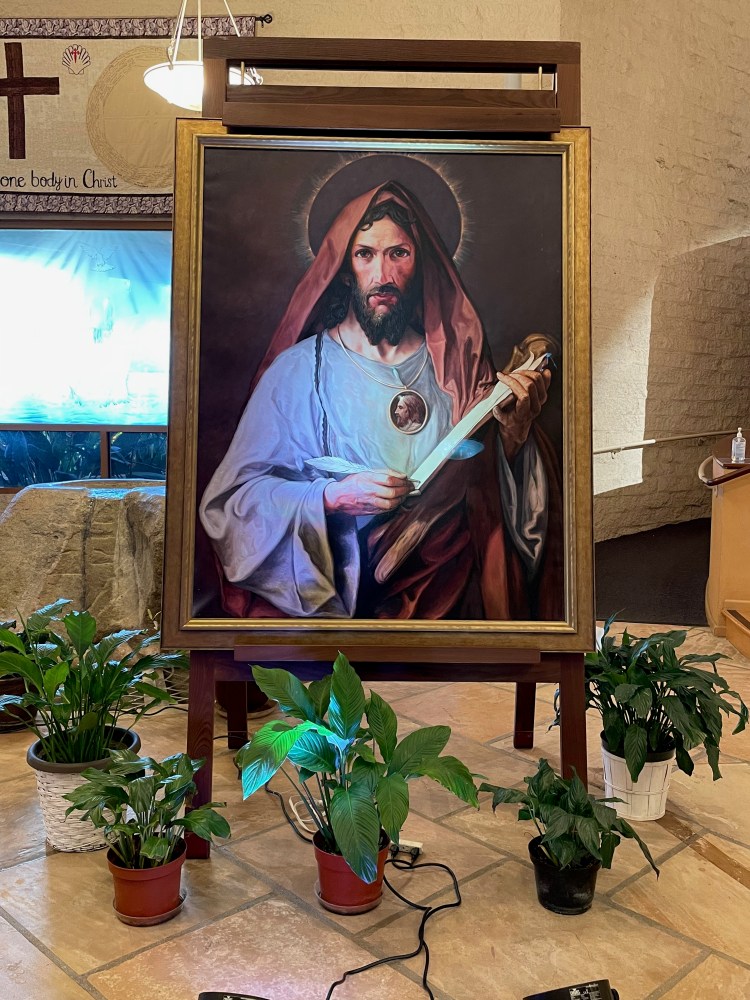
St. Jude, not to be confused with Judas, was one of the 12 apostles of Jesus. He is called “the apostle of the impossible,” and is often called upon for intercession in resolving very difficult situations.
A first-class relic of St. Jude, on loan from the Vatican, has been making a tour of the United States since September of last year. Catholics from the Diocese of Orange were able to venerate the relic during the tour’s stop in Southern California in April.
Note: First-class relics are parts of the bodies of saints. They might include bones, hair, flesh or blood. Second-class relics are items the saint has touched, such as clothing or a Bible or other religious items. A third-class relic is something that has touched a first- or second-class relic.
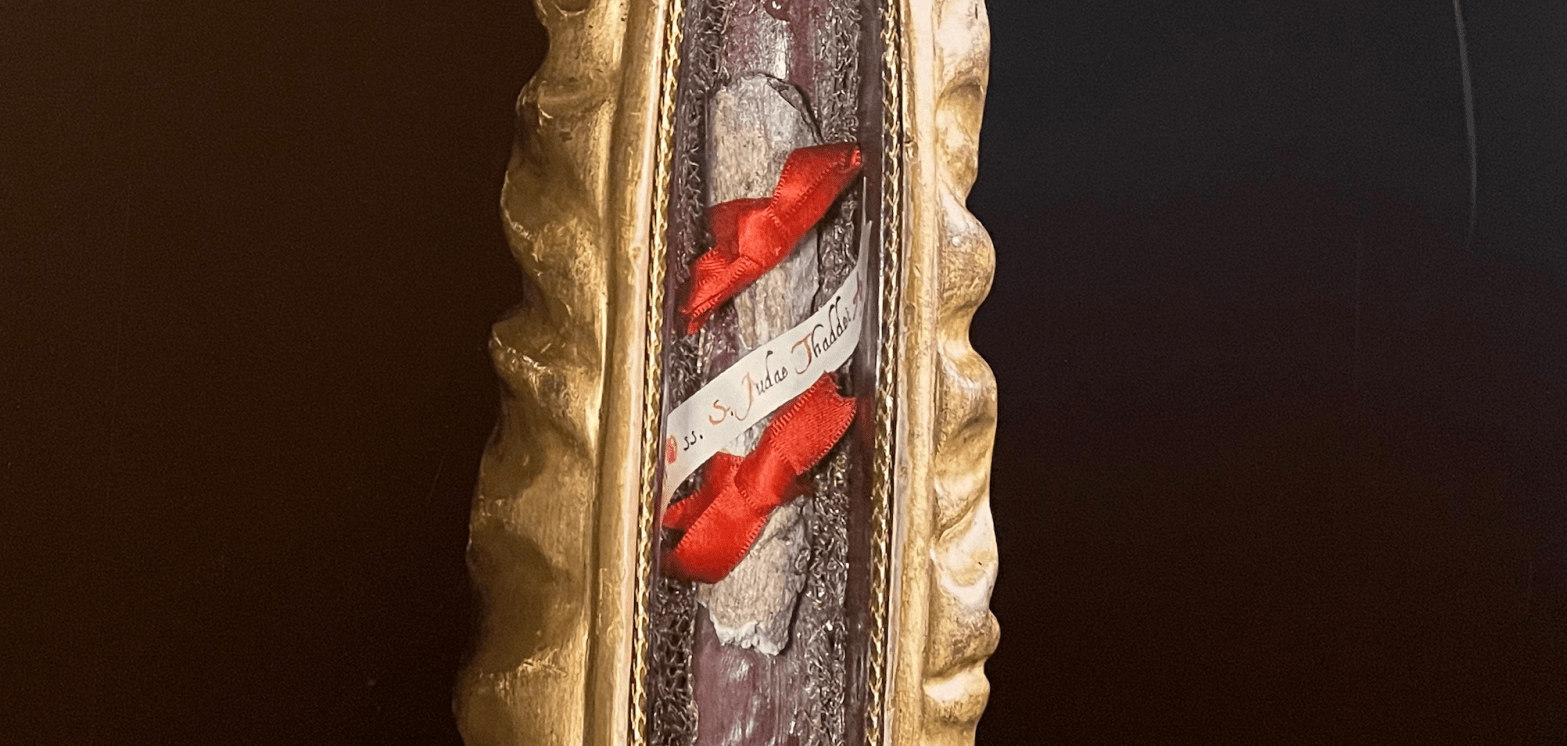
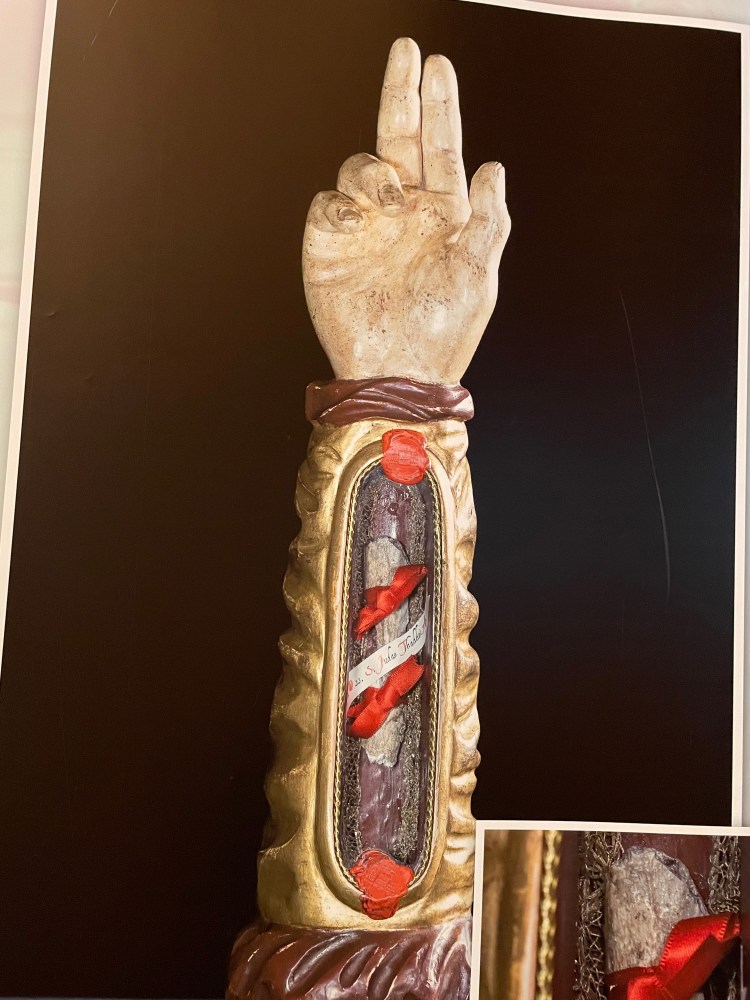
A bone from St. Jude’s arm, housed in a reliquary depicting the arm in which the bone would have appeared, was clearly visible from within the glass case that protected it. (So many relics are hard to actually see because they are so tiny, but not this one.)
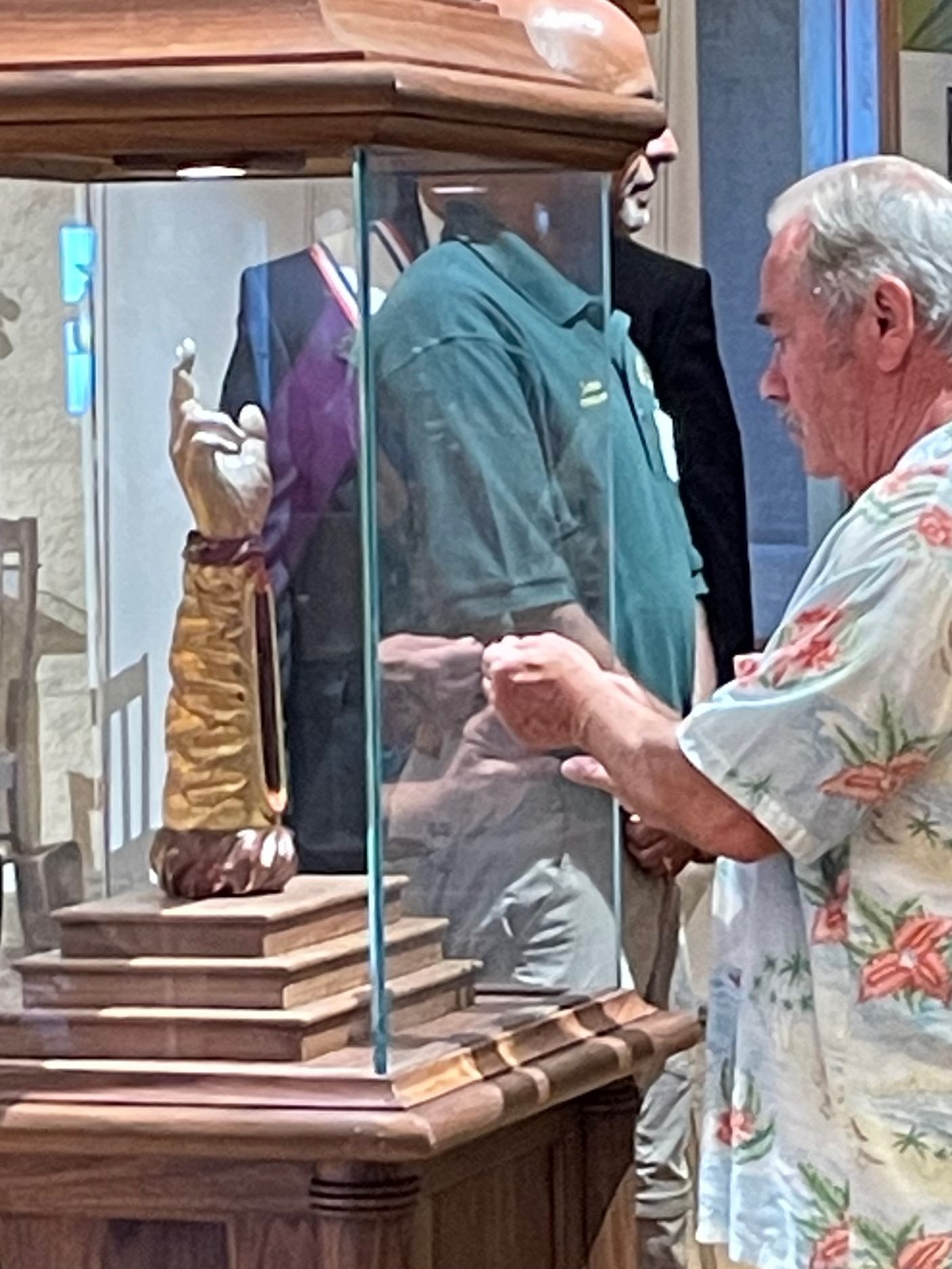
Fr. Carlos Martins, Director of Treasures of the Church, who is traveling with the relic welcomed the long line of pilgrims who came to see it while on display at Santiago de Compostela Catholic Church in Lake Forest. He told the crowd that if one holds a rosary or bible or picture of a loved one up to the glass case that contains the relic, those objects will become third-class relics of St. Jude.
After waiting almost two hours in line to enter the church, my husband and I each held cherished rosaries to the glass case. One belonged to my mother. The other belonged to her mother. So now in my possession are two third-class relics of St. Jude.
In a sense, these rosaries are second-class relics of my mother and grandmother. In using them to pray the rosary I am holding the same beads that I know they fingered as they submitted their petitions to Our Lady with each rosary they prayed.
The experience of seeing St. Jude’s relic and connecting that to my own mother and grandmother, led me to question what relics exist for the Virgin Mary. What can we see and touch today that might better connect us to her?
As Father Johann Roten, S.M. writes on the University of Dayton’s “All About Mary” website, “Since the Blessed Virgin Mary was assumed bodily into heaven, we do not possess any first-class relics of her with the exception perhaps of some hair.”
Second-class Marian relics that have been venerated, even though the authenticity of some has not been verified, are said to include Mary’s sash, her engagement and wedding rings, a pair of her shoes and several veils. Some of these items were lost or stolen, according to Fr. Johann.
Have you come to believe because you have seen me? Blessed are those who have not seen and have believed.
I am hoping to bring more knowledge about the Virgin Mary to the world, especially during these times when we need her most. Please consider sharing this post, this site, or its social media pages on Facebook and Instagram. I invite you to subscribe to this site (below) to be notified of new posts. Thank you.
 searchingforthevirginmary.com